Improve alternative payment method
Brief
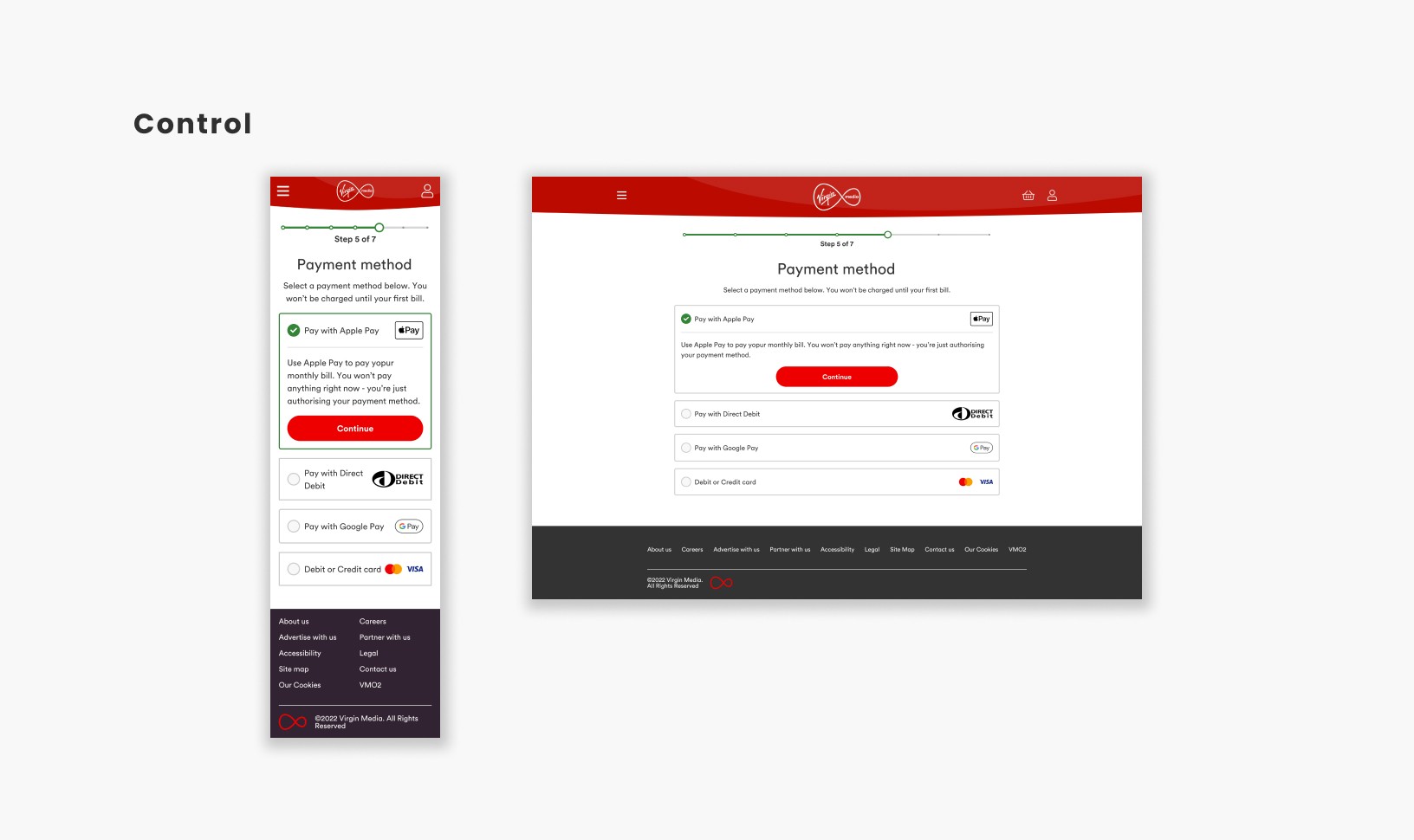
Problem: Although multiple payment options were available during checkout, most customers still selected Direct Debit as their preferred method.
Hypothesis: By highlighting Apple Pay and Google Pay as faster, more convenient alternatives, we could increase adoption of these payment methods, without negatively impacting overall order conversion.
Background insight: Research revealed that some users were unaware they could use Apple Pay or Google Pay for recurring payments, which made them hesitant to select these options. This indicated a clear opportunity to improve awareness and trust.
Test type: AB
Research and ideation
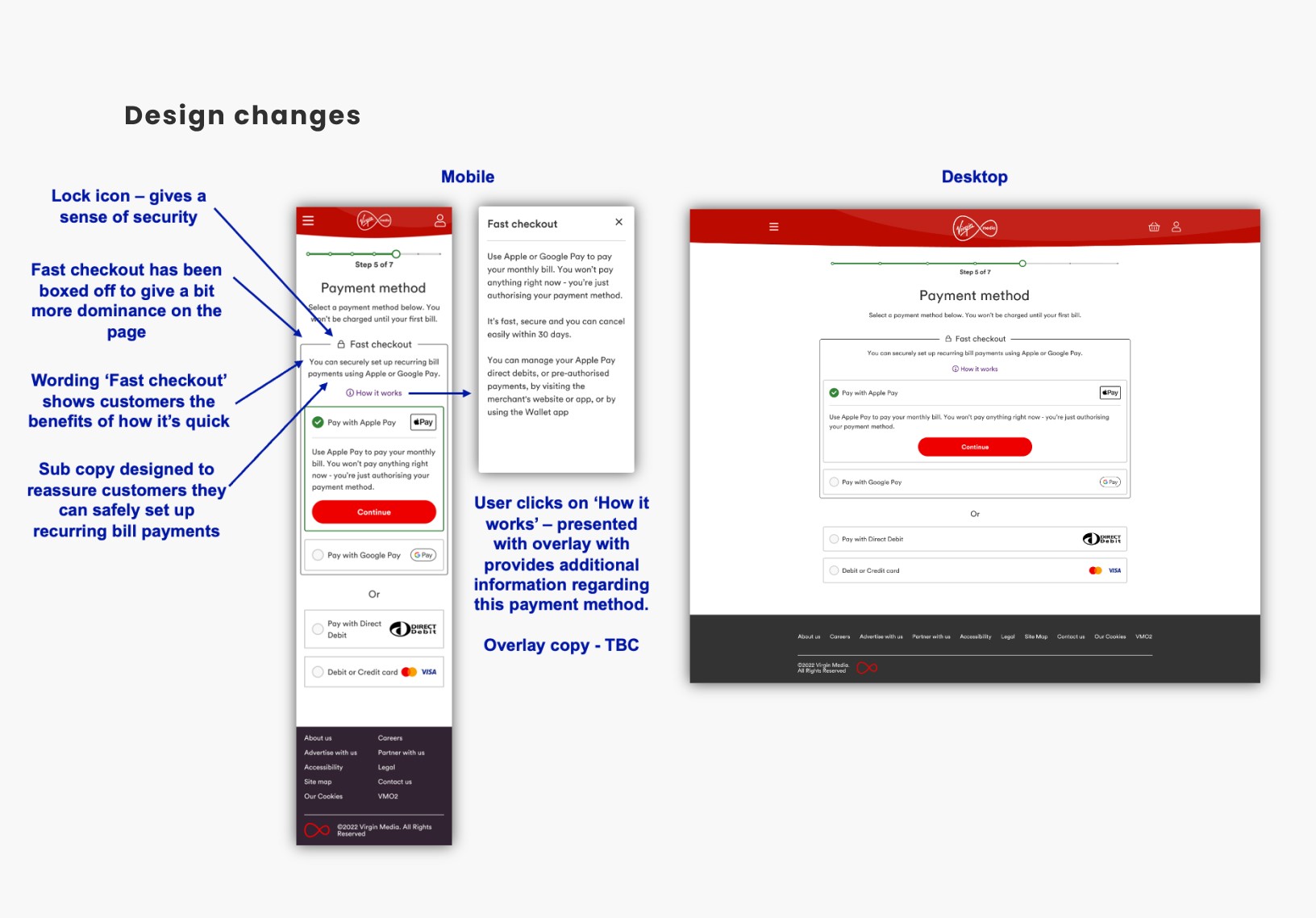
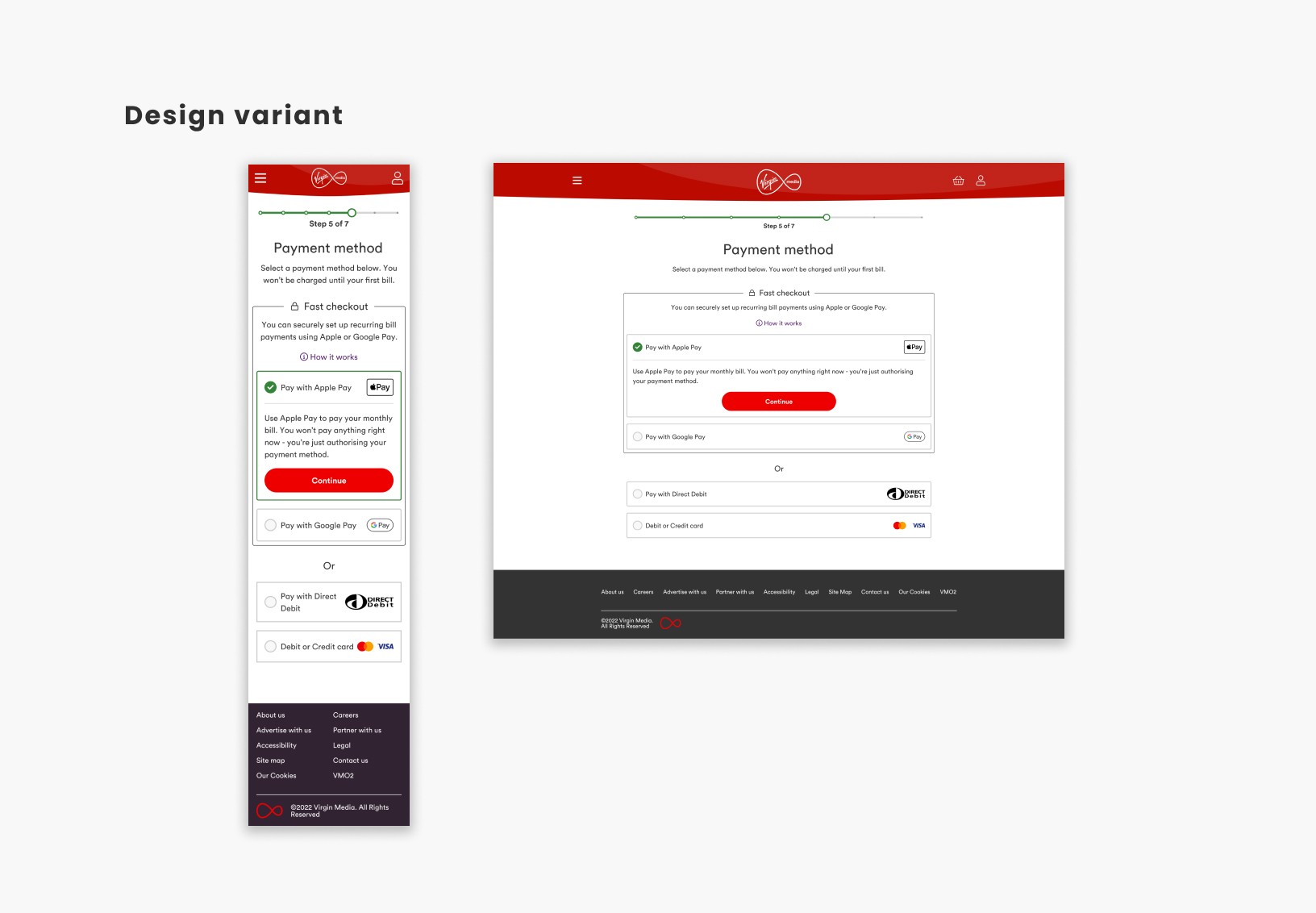
I recalled a previous project at O2 where we successfully promoted a ‘Fast Checkout’ feature by visually boxing it off to draw attention. Applying a similar approach here, I explored ways to make Apple Pay and Google Pay more prominent on the Virgin Media checkout page.
Working closely with a copywriter, we introduced the “Fast Checkout” label and supportive sub-copy that explained the speed and ease of these options, while also reassuring users that they could safely set up recurring bill payments.
To further build confidence, we added a “How it works” link, allowing customers to access additional information about these payment methods before completing their purchase.
Result
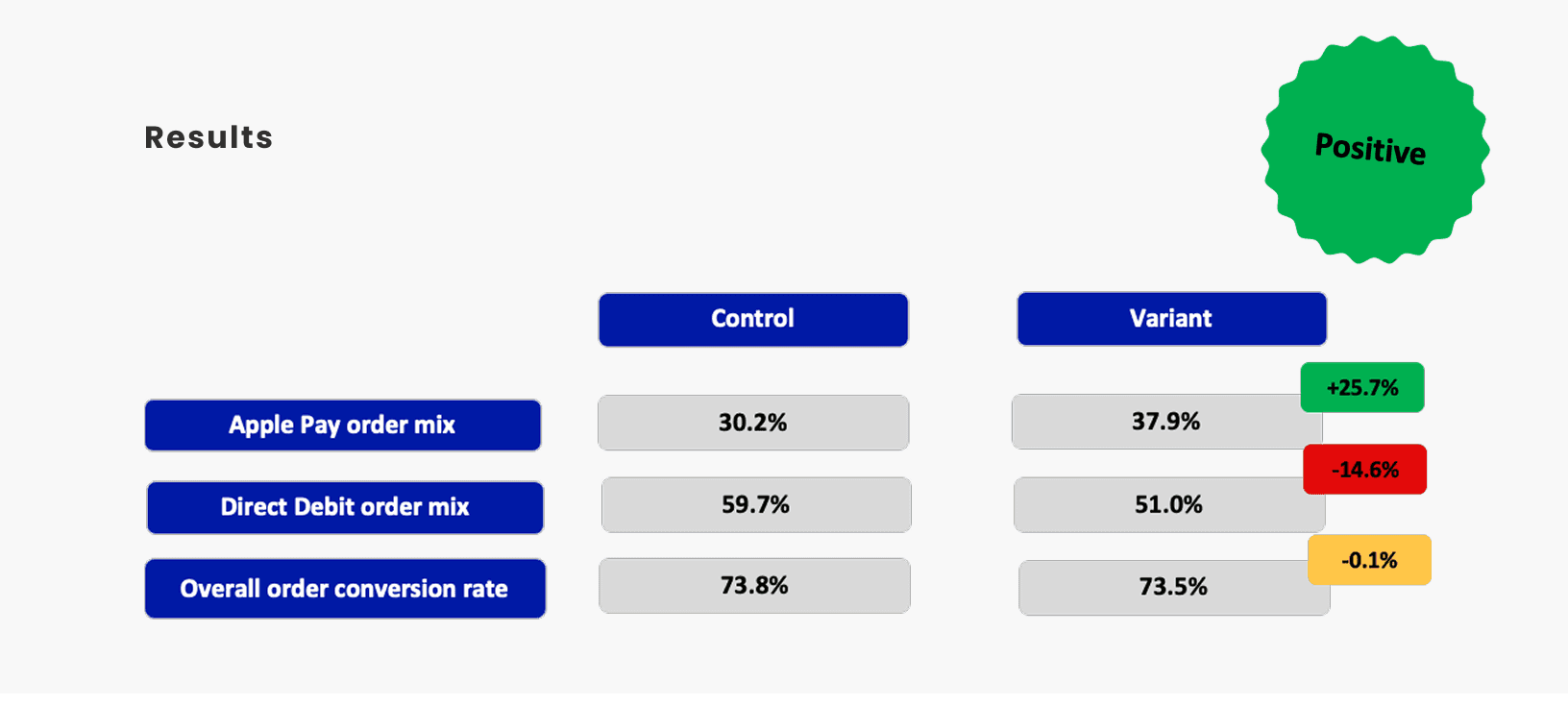
Result: The test delivered strong outcomes, successfully driving the desired shift in payment behaviour:
Apple Pay usage increased by 25%
Direct Debit usage decreased by 14%
Overall order conversion remained stable, confirming no negative impact
We also discovered that Google Pay usage on Safari was negligible (<1%), suggesting it may be redundant on that browser. The same positive trends were observed across desktop and mobile, with mobile making up the majority of test traffic (87%).
Next step: The next iteration will test the removal of Google Pay to validate performance and finalise recommendations for the native app build.
Speed selection - Customisation page
Key details
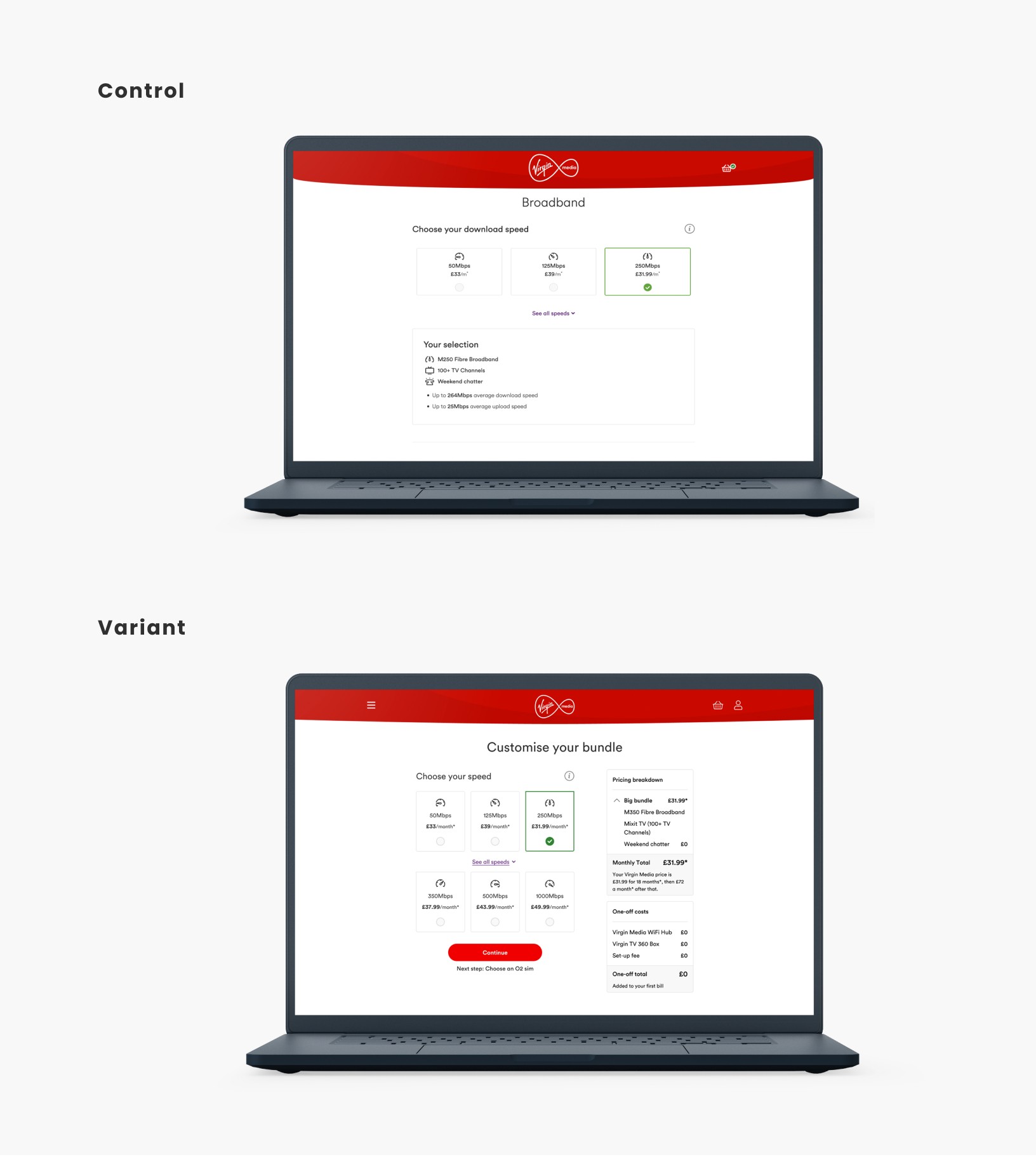
Problem statement: The broadband speed selection step within the customisation journey was missing upsell opportunities by displaying all speed tiers, including lower options, and failing to clearly communicate the benefits of faster packages.
Hypothesis: By simplifying the speed selection, removing unnecessary lower tiers, and highlighting the advantages of higher-speed plans, we can increase customers’ propensity to choose faster options — ultimately boosting average revenue per user (ARPU).
Test type: AB
Design changes
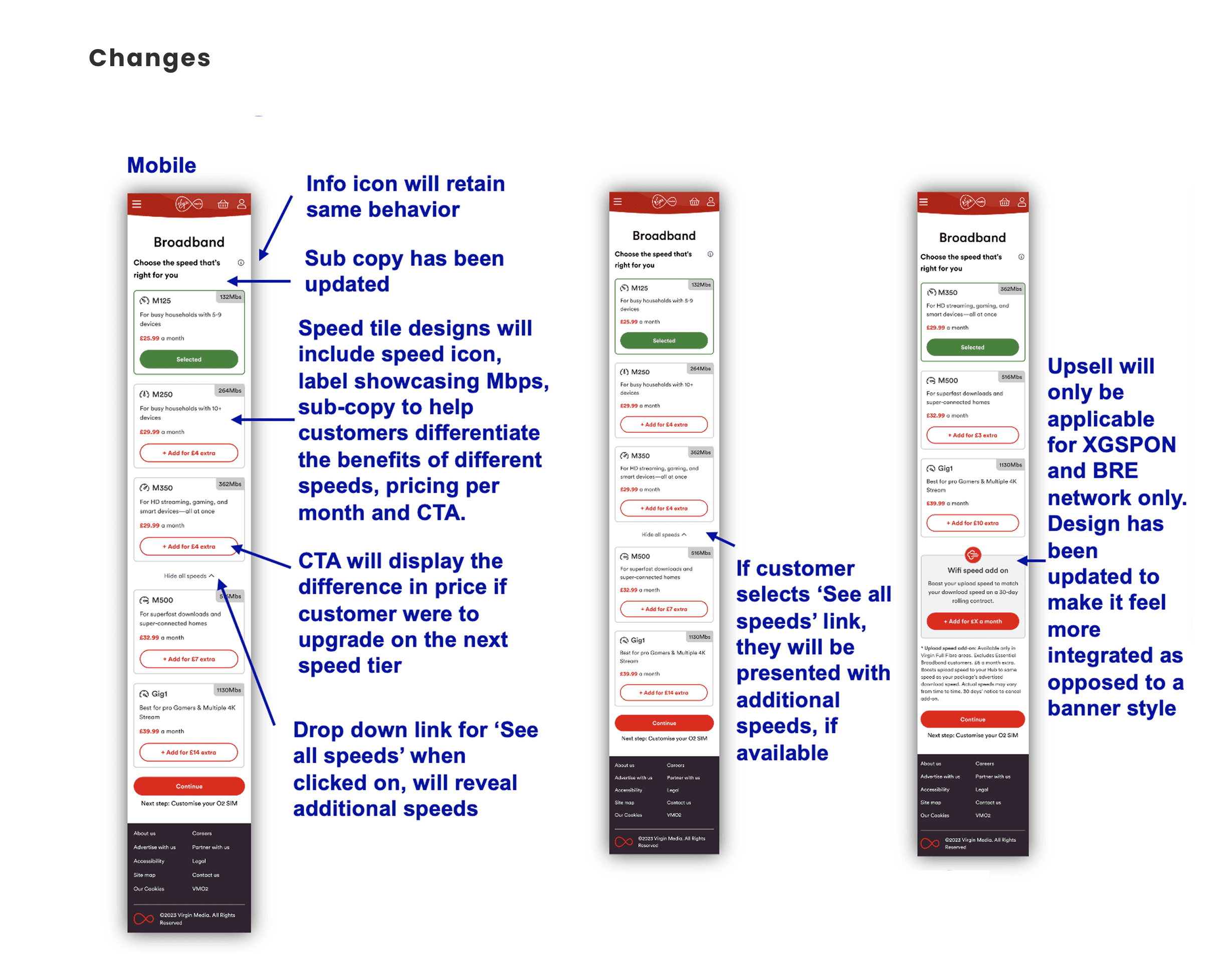
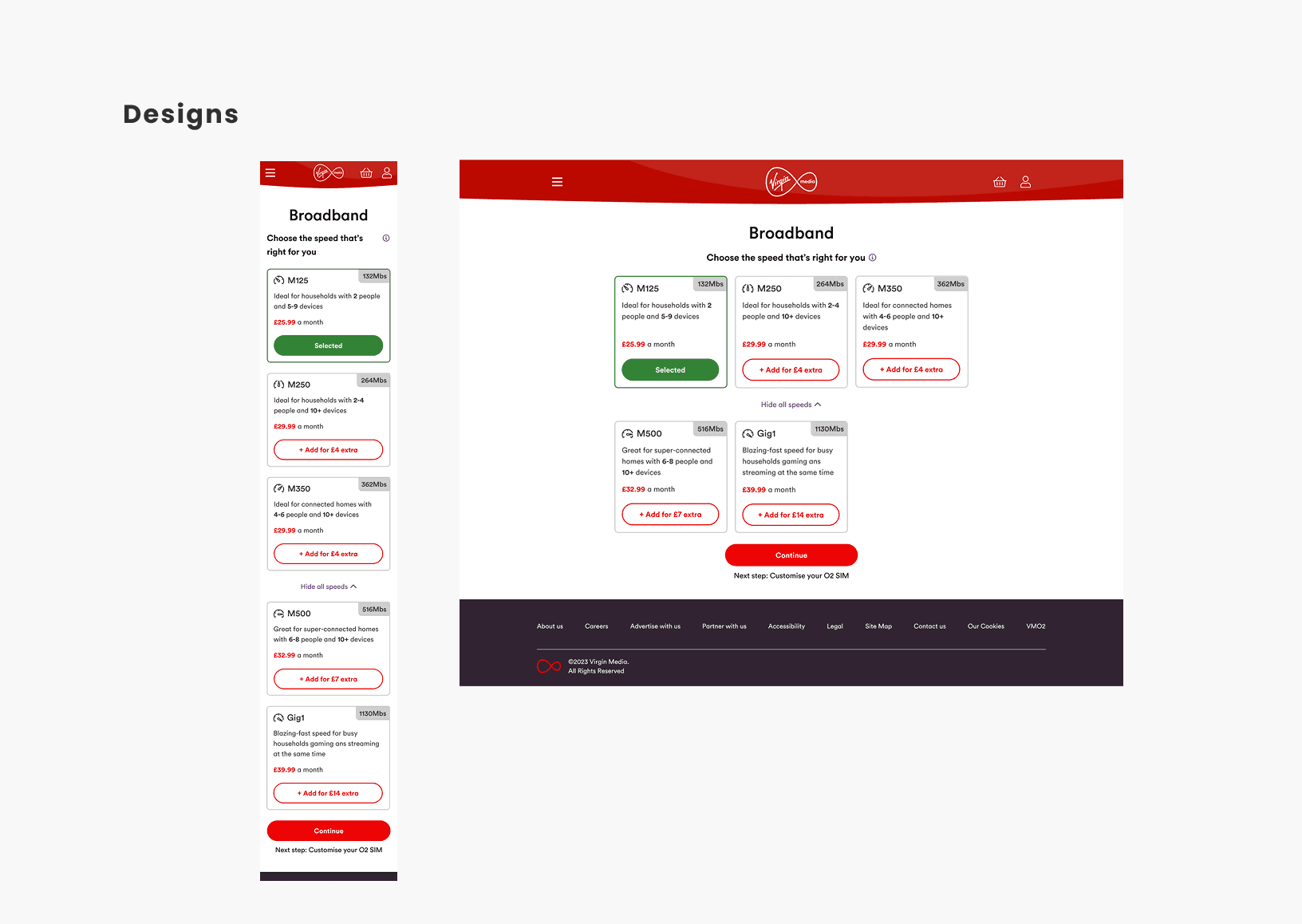
Previous testing revealed that displaying exact speed figures (e.g. 132 Mbps) did not resonate strongly with users. However, due to legal requirements, this information had to remain, so I intentionally reduced its visual prominence.
To make speed options easier to understand, the sub-copy was rewritten to clearly differentiate the benefits of each speed tier. The selected speed was visually highlighted, using the selected state, while upgrade options featured a clear call-to-action showing the incremental cost (e.g. +£6 for faster speed), encouraging users to explore premium tiers.
Result
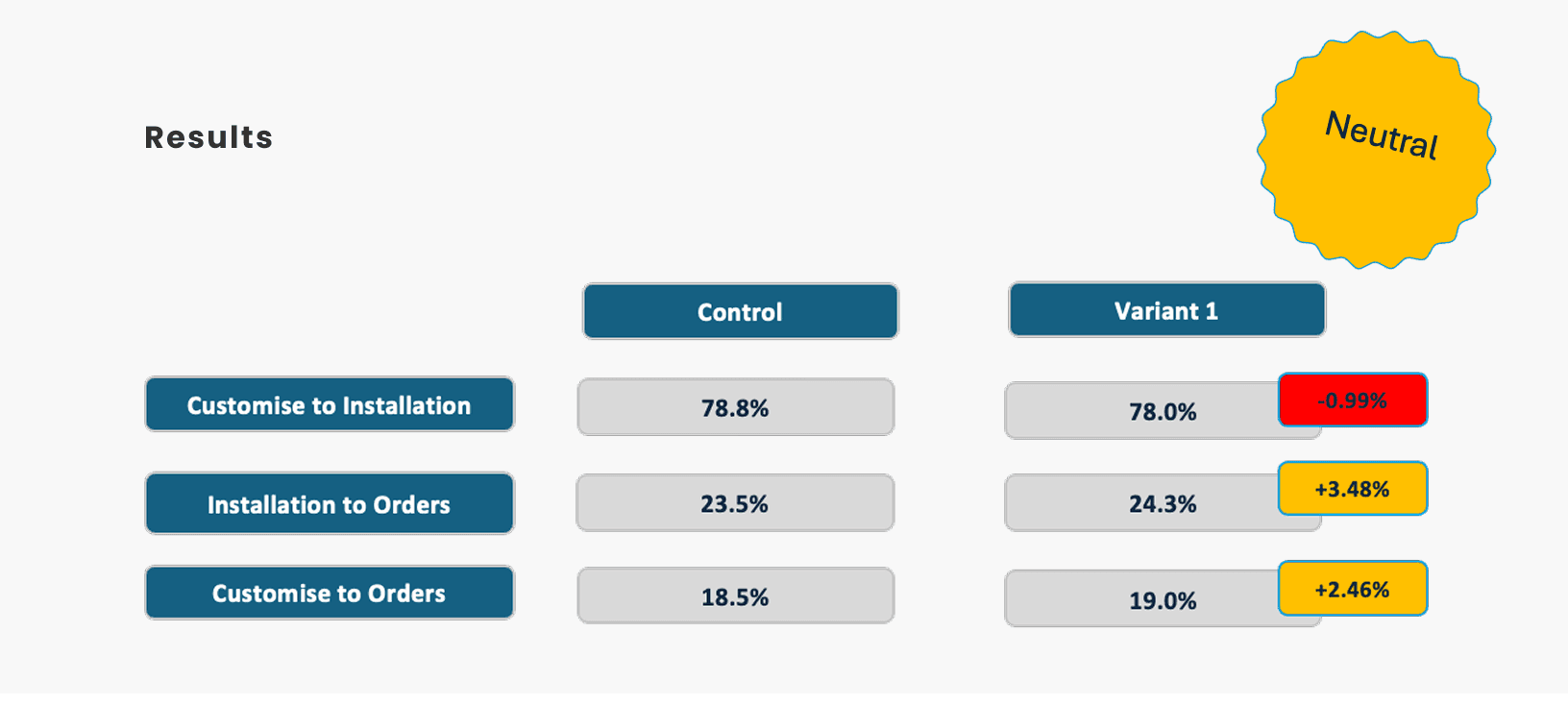
The variant showed a positive impact on product selection behaviour.
31% of purchasers changed their product during the journey — a 5% uplift compared to control.
The most common switch was from M350 BB + TV to Gig1 BB + TV, accounting for 2% of users.
While progression from customisation to installation declined slightly, this was not statistically significant.
Both desktop and mobile showed the same pattern, with mobile exhibiting a stronger effect.
Overall, the test produced a 2% increase in conversion rate, though this was also not statistically significant.
Summary : The test confirmed that simplifying the presentation of broadband speeds and emphasising upgrade benefits can influence users to consider higher-tier packages without disrupting conversion behaviour. Future iterations could explore enhanced messaging or visual cues to further strengthen the upsell effect.
TV Page redesign
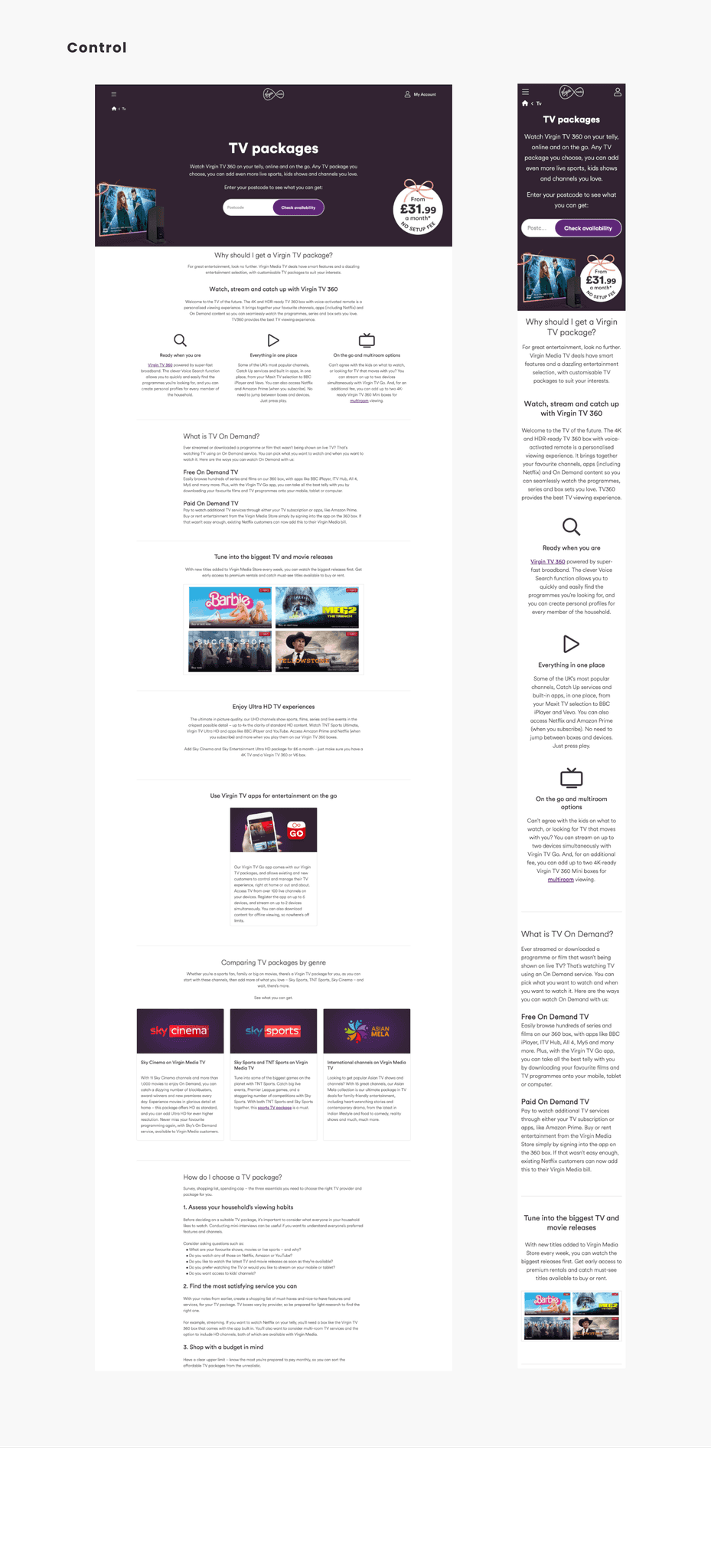
Brief
Problem statement: 28,000 customers who land on the TV page do not enter their postcode (57% drop-off).
Hypothesis: By updating the layout of the TV Packages page (pre-SVC, before postcode entry), we aim to increase SVC completions, encouraging more users to enter their postcode and progress through the journey.
Test type: AB
Research
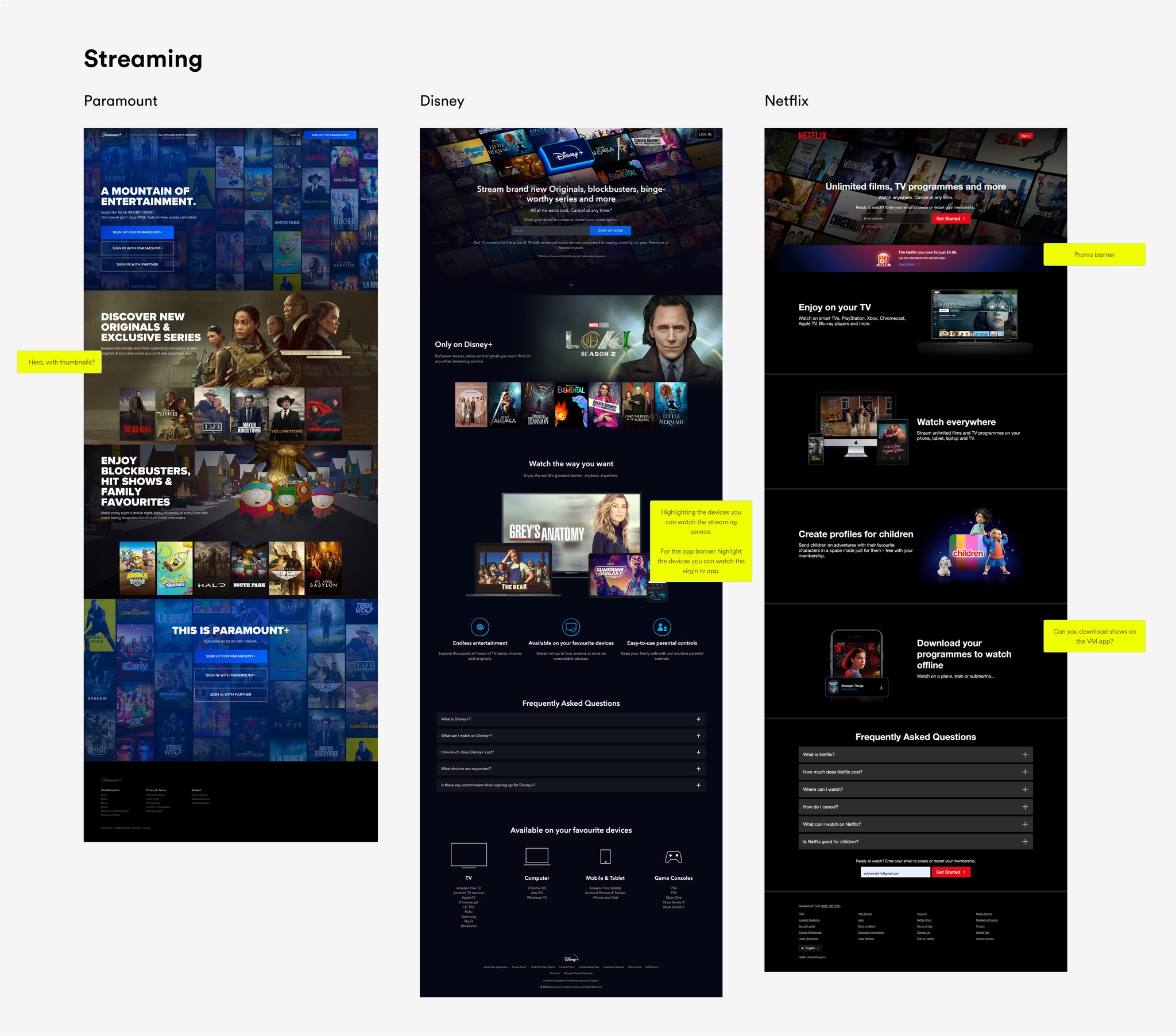
To begin, I reviewed competitor and streaming sites and noticed that many use dynamic, cinematic photography and dark, immersive backgrounds to convey excitement and emotion. These create a more engaging and entertainment-driven experience, something Virgin Media’s existing TV page lacked.
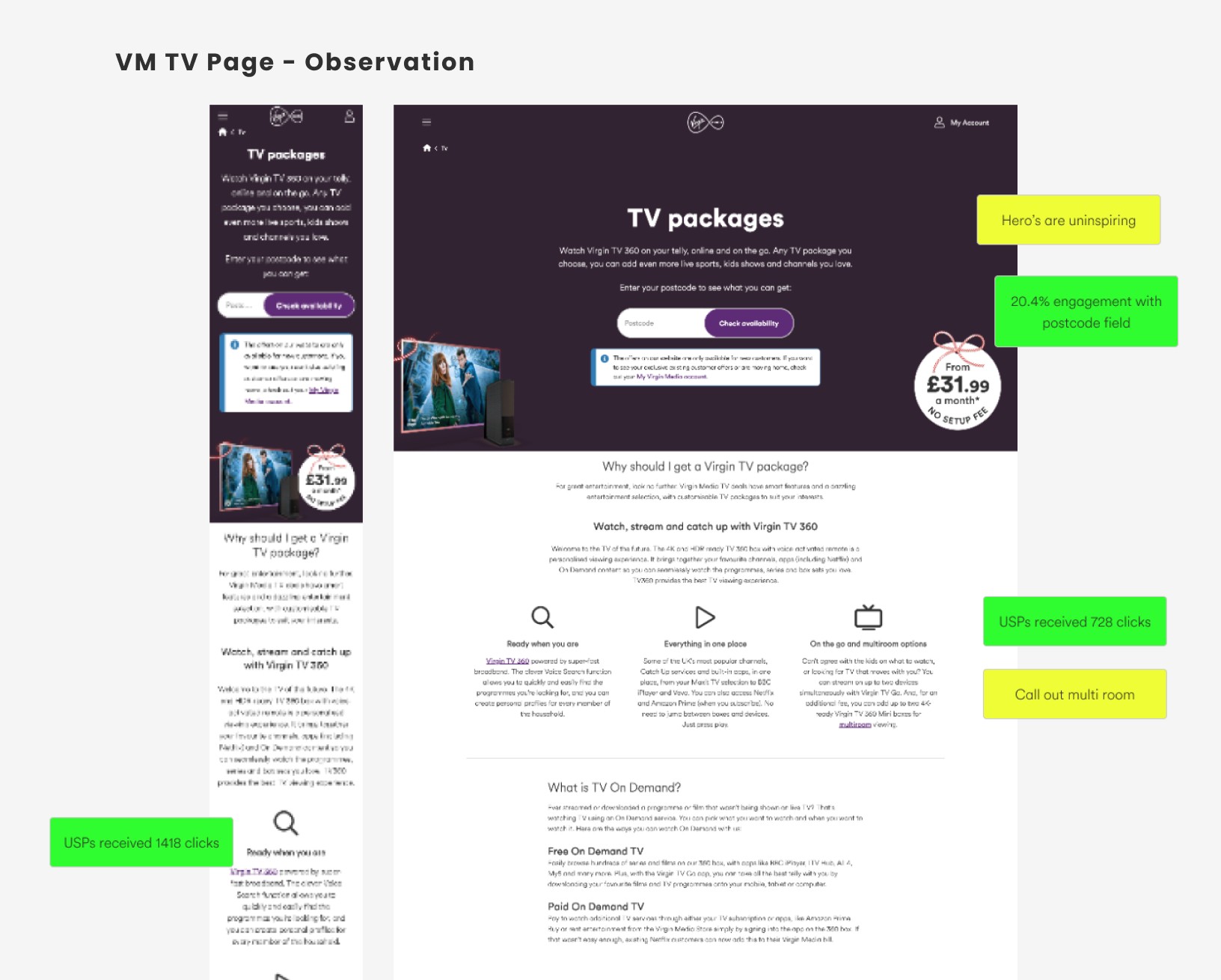
Virgin Media - TV Page
Upon auditing the current page, I found the hero section underutilised and visually uninspiring, despite occupying significant space. I identified an opportunity to make this section more engaging and marketable, setting a stronger emotional tone for the page.e.
Content square
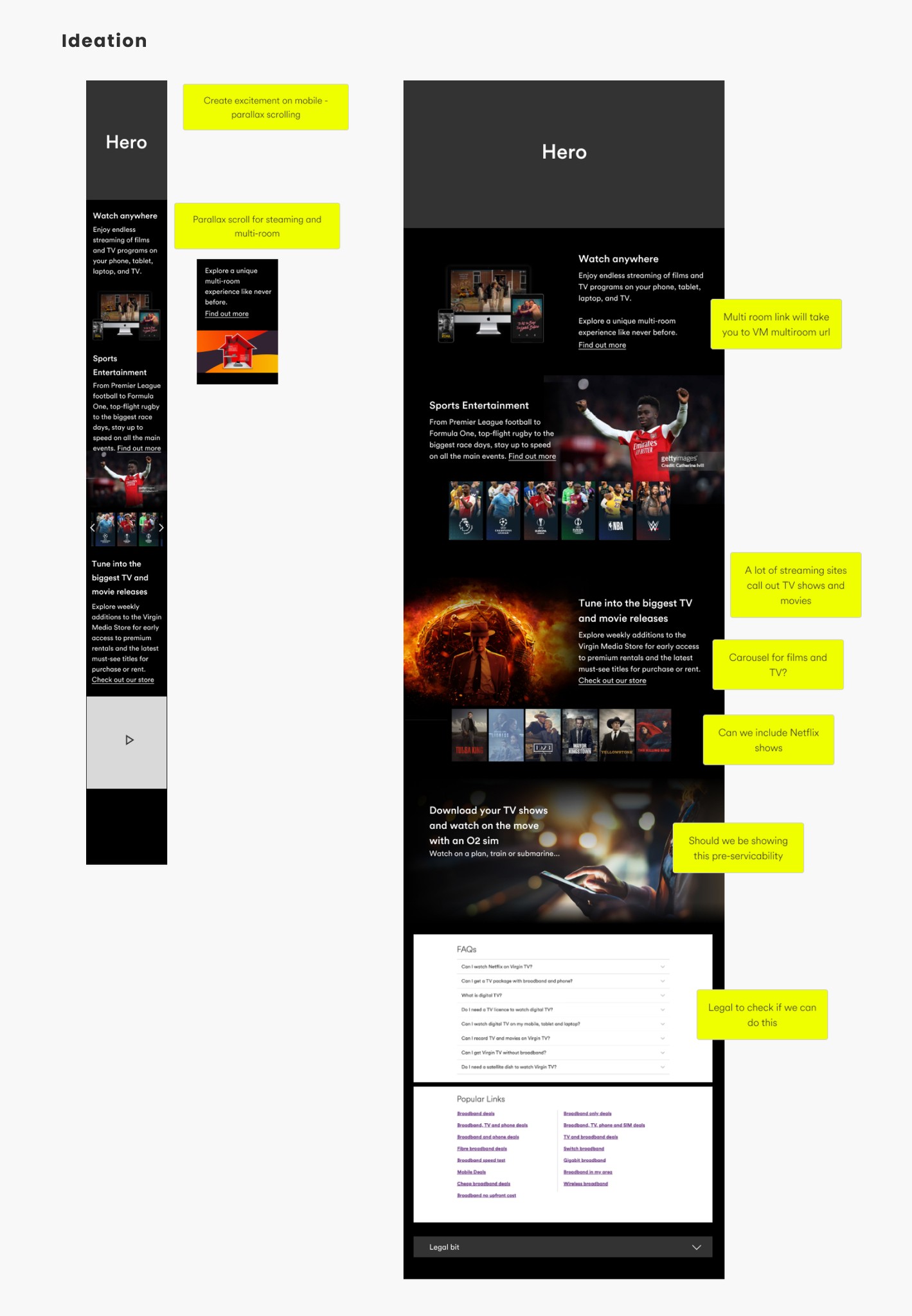
I observed data from Content Square to define the hierarchy of the page.
Key Insights
Desktop:
Many users remained inactive (aside from postcode entry) for the first 60 seconds.
Most-clicked sections:
FAQs: 2,887 clicks
“Ready When You Are”: 728 clicks
“Everything in One Place” & “On the Go / Multiroom Options”: 659 clicks
Sky: 656 clicks
Mobile:
Users engaged earlier, typically within the first 60 seconds.
Most-clicked sections:
FAQs: 3,540 clicks
“Ready When You Are”: 1,418 clicks
“Everything in One Place” & “On the Go / Multiroom Options”: 1,418 clicks
Sky Sports: 1,269 clicks
These insights helped define the page hierarchy and identify content opportunities that could drive earlier engagement.
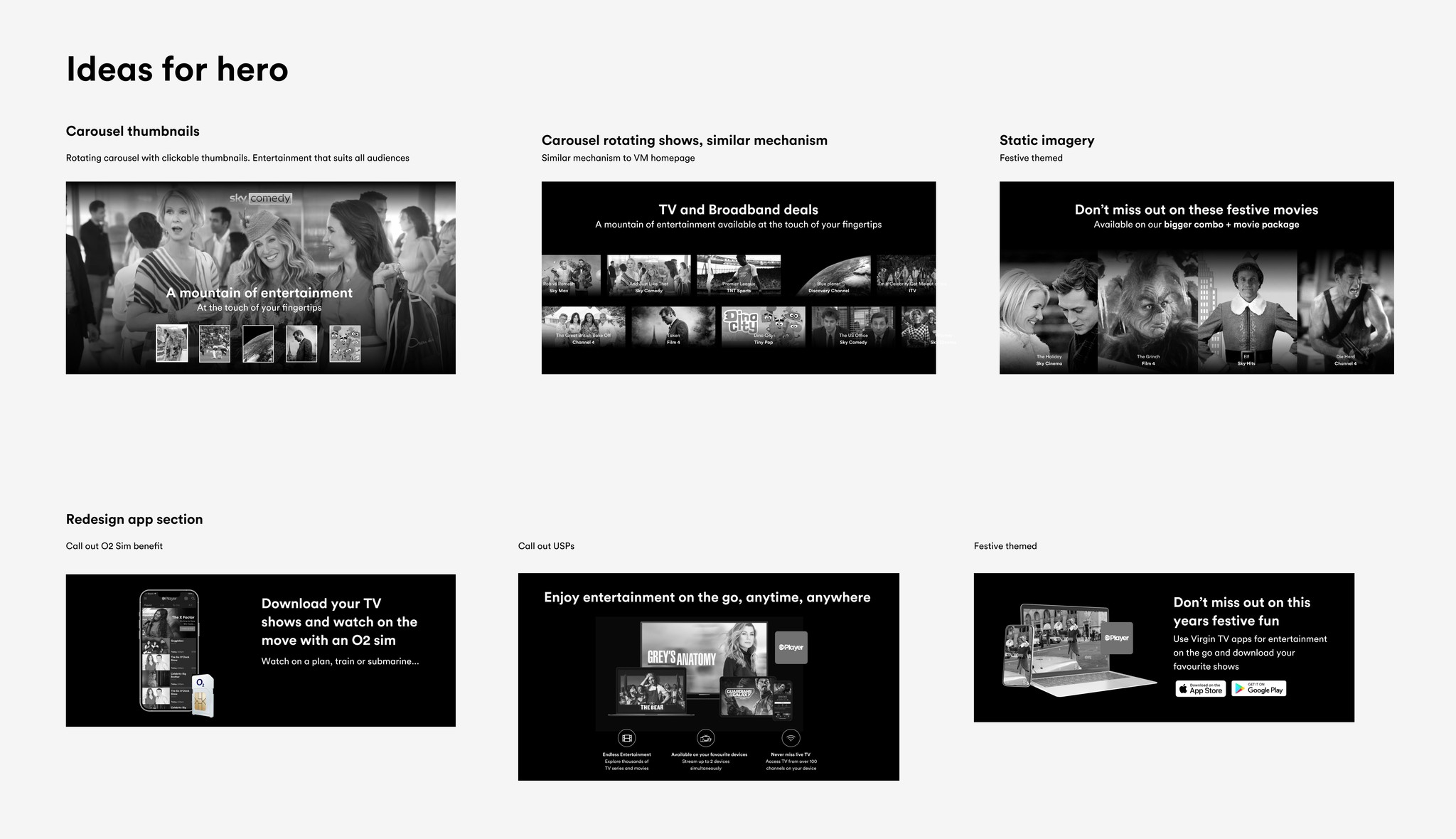
Ideation
I developed three key concepts to reimagine the page layout and storytelling approach:
Entertainment for Everyone – A concept showcasing content for all audiences, featuring the latest TV shows, sports, and movies. This included a thumbnail carousel for seamless exploration.
Maximising the VM Carousel – Leveraging Virgin Media’s existing homepage carousel mechanism to spotlight premium content and drive familiarity through consistent UI patterns.
Thematic Highlights – A flexible content framework for seasonal or event-based campaigns (e.g., Festive Favourites featuring must-watch Christmas movies).
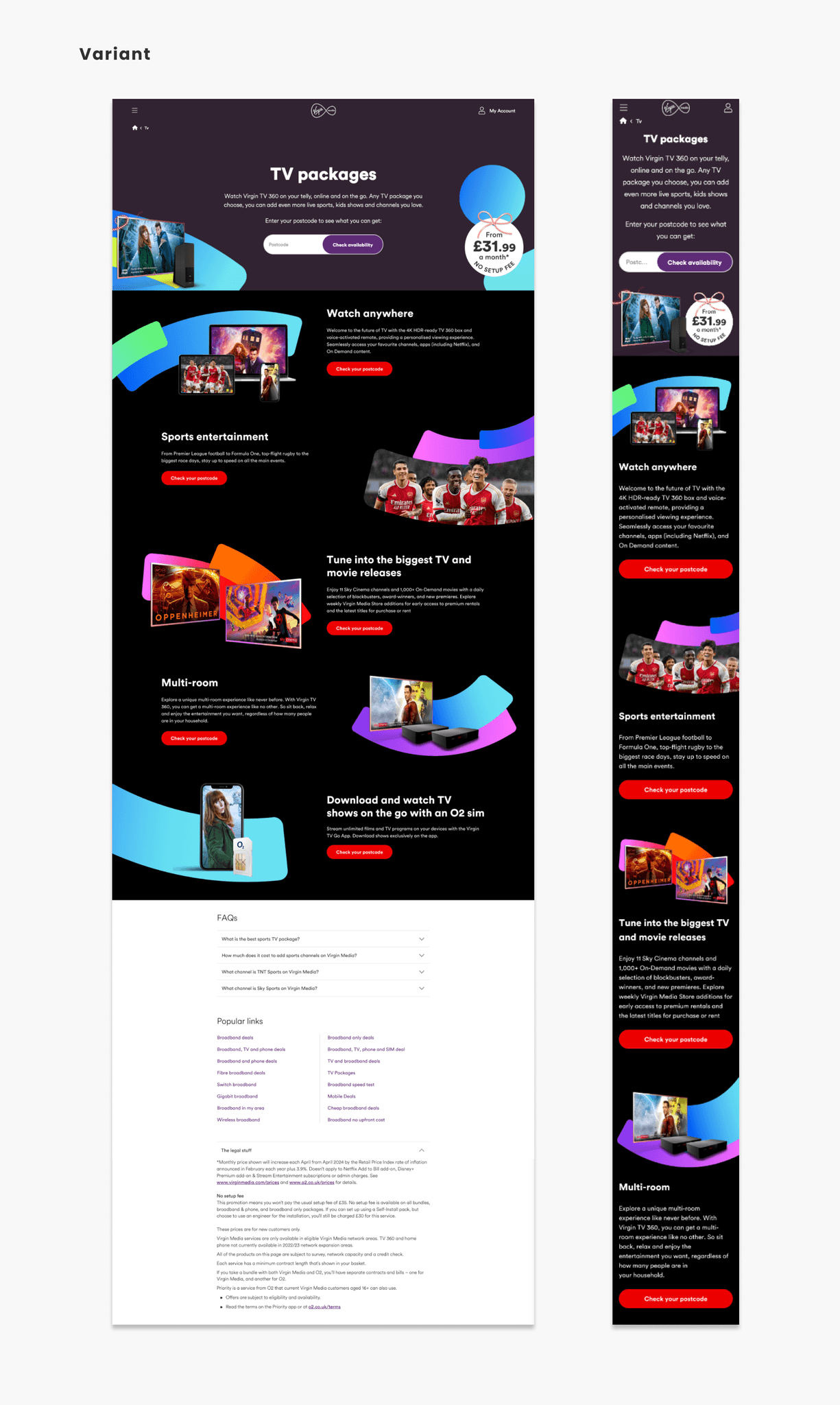
Final design
The redesigned page was structured to lead users through the full breadth of Virgin Media’s entertainment ecosystem:
The hero section now spotlights channels, apps, and on-demand content.
Followed by Sports and Movies segments that showcase value and breadth.
A dedicated Multiroom section communicates key perks.
The journey ends with a cross-sell opportunity for an O2 SIM, encouraging bundle consideration.
FAQs and Popular Links remain at the bottom for SEO performance, and legal text was simplified into an accordion format.
To encourage postcode entry, the primary CTA (“Check Your Postcode”) anchors users back to the hero banner, making the action more visible and intuitive across devices.
Test result
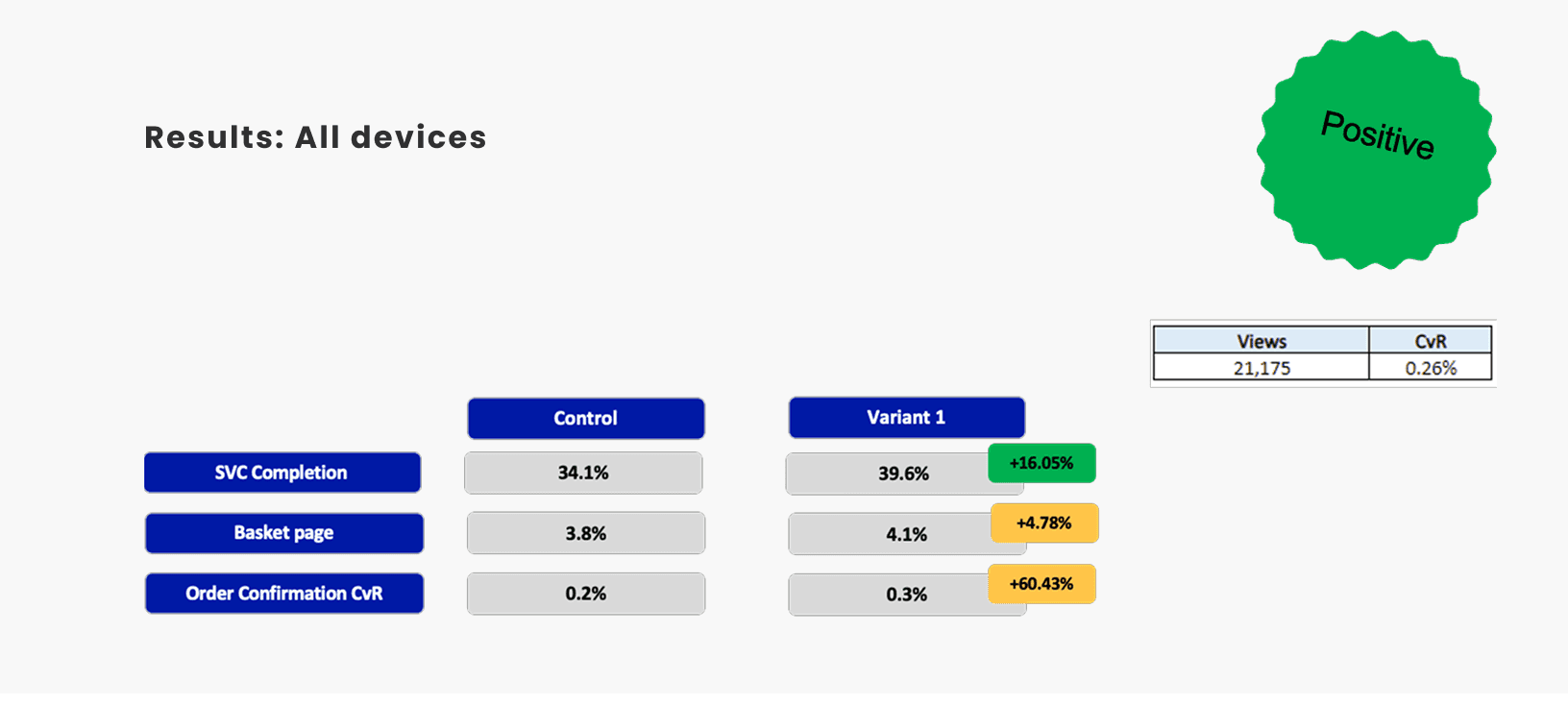
The redesign delivered encouraging results:
SVC completion rate increased by 16% (statistically significant) across all devices.
Mobile users showed a nearly 30% uplift in progressing to the basket post-SVC (not statistically significant).
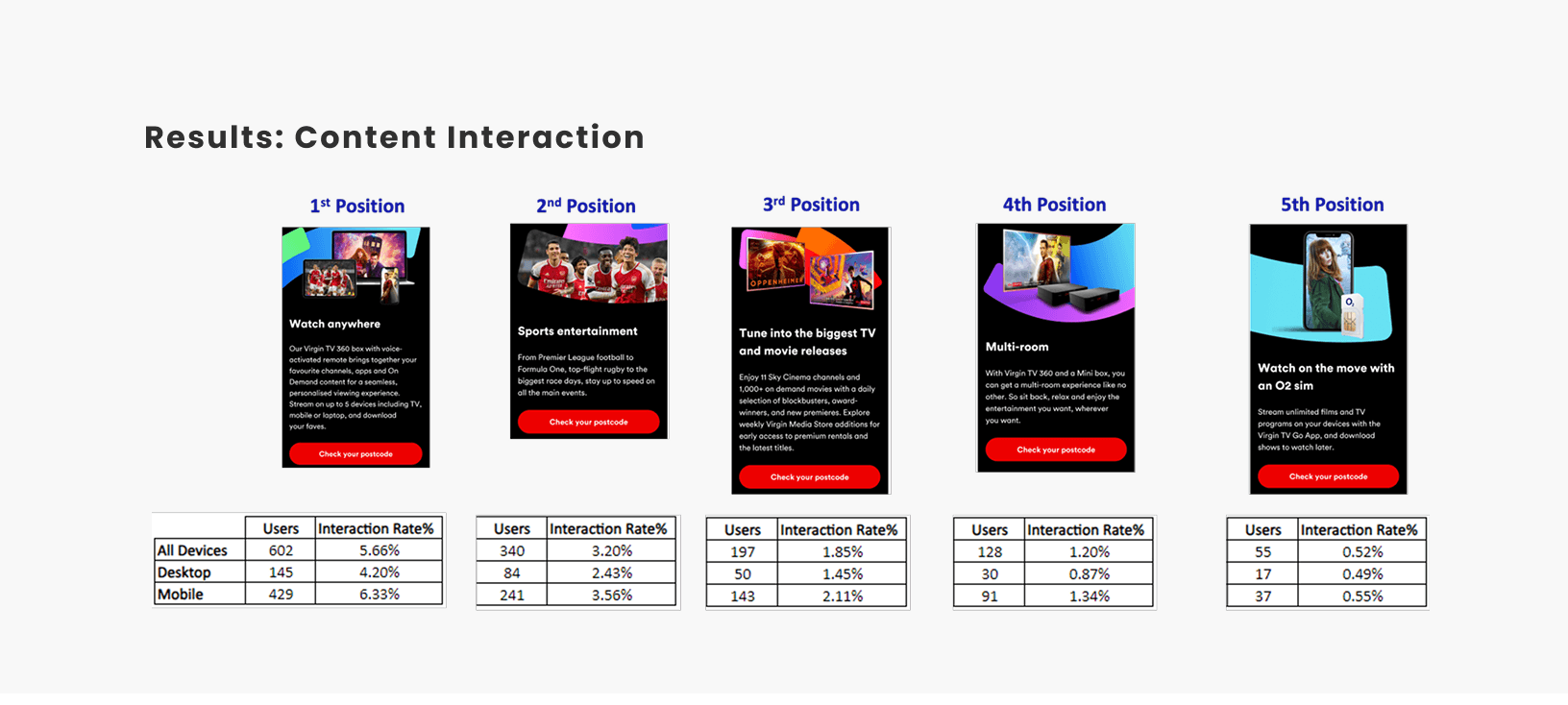
The most engaged CTA was “Watch Anywhere”, driven by its strong placement above the fold.
A 7% decline was observed between postcode entry and basket progression — potentially due to content relevance or pricing hesitancy — providing valuable insight for future iterations.
Overall, engagement significantly improved, validating the new direction. Further optimisation of CTA hierarchy and post-SVC content is planned to continue driving conversion.
Product summary - Customisation page
Brief
Previous tests have shown a lot of users click through to the customisation page directly from the product cards, but they drop off later in checkout journey. We think this might be due to the lack of clear basket summary within the customisation page.
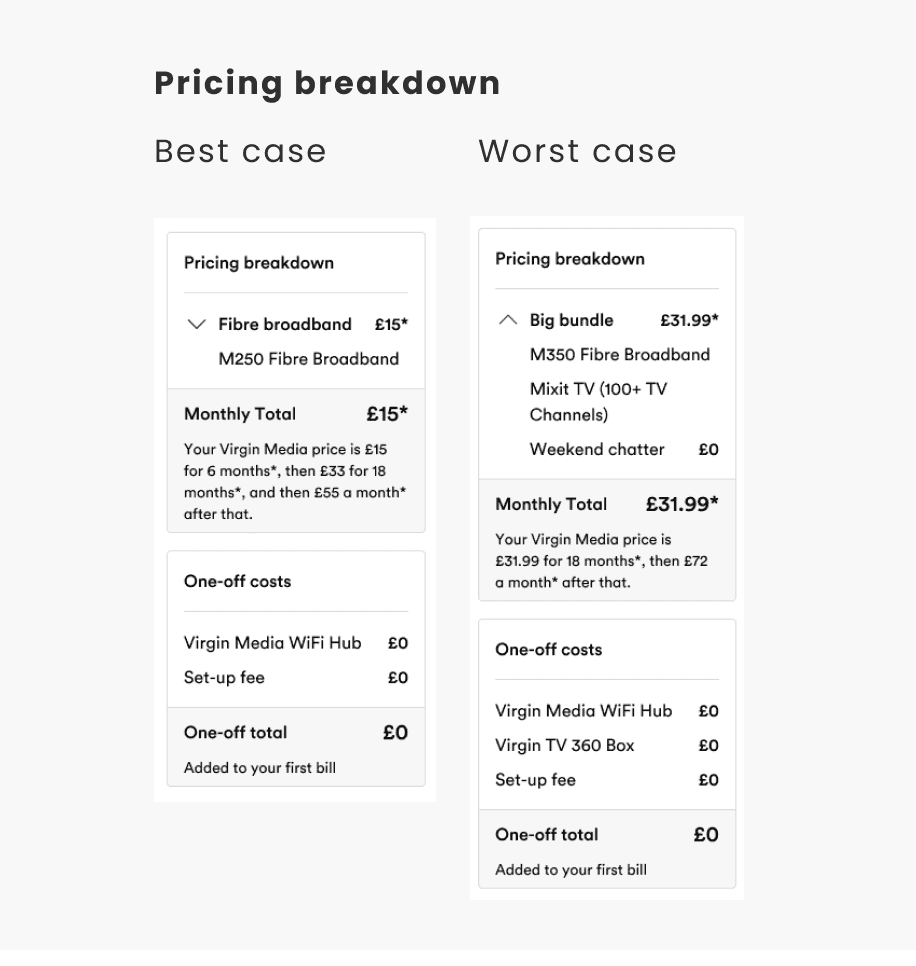
Pricing breakdown
By adding a clearer product and pricing summary for users who go through customisation page via the product cards will provide reassurance for their product selection and give them the confidence to proceed with their order. This is a desktop breakpoint test.
In an effort to minimise the page height, I changed the placement of the pricing summary to the top right on a desktop screen. In the pricing summary, I grouped the key packages—broadband, TV, and mobile into a drop down accordion, so customers were able to focus on the key details.
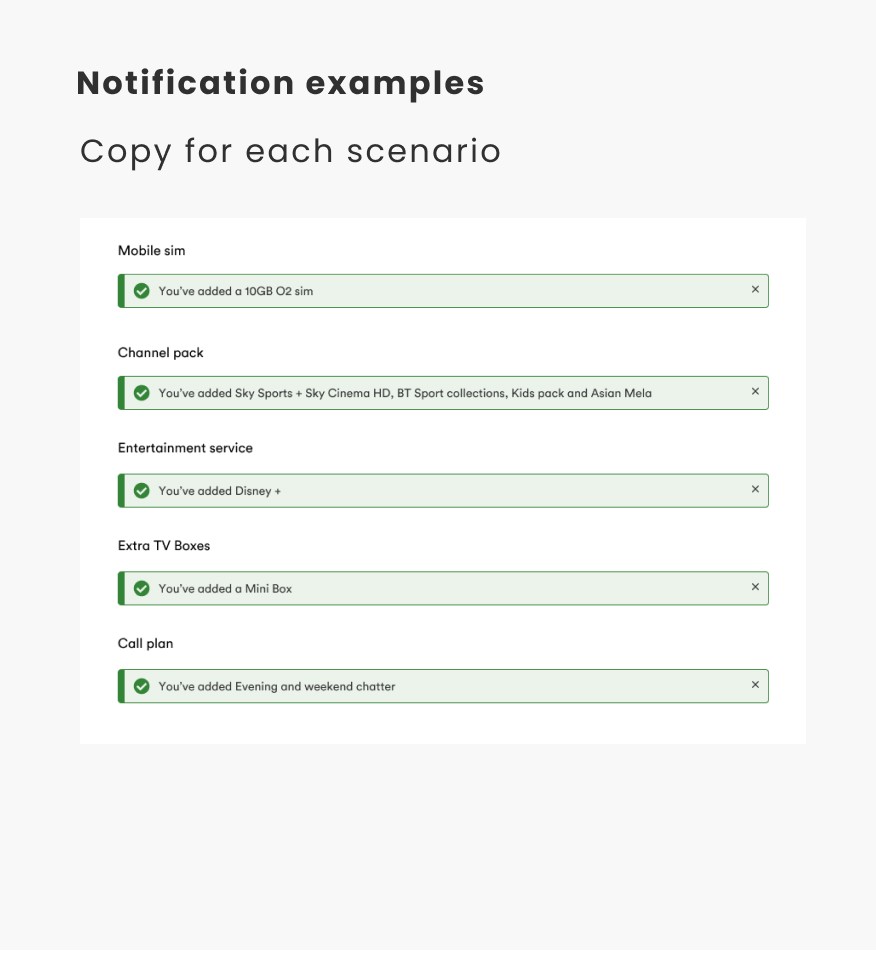
Notifications
To address the issue of customers not noticing changes in their basket, I introduced a banner, inspired by a previous animation task, to clearly indicate any modifications. Additionally, the small price summary now allows customers to easily view these changes.
Result
The test was concluded as a neutral result. The overall conversion rate (CVR) saw a statistically insignificant decline across devices.
In Net Sales per Page (NSP), all test pages, except the review basket step, showed a significant positive uplift. However, the basket had a significant decline, suggesting users weren't ready for commitment. Users clicking on the product CTA card had a positive conversion rate of over 7%, but progression from "Your Details" to "Review Submit" was down, likely due to customers not being ready to commit.
Black Friday - Exit intent overlay
Brief
There is a concern that customers make an assumption that Black Friday deals get better towards the Black Friday weekend, or they might get a better deal somewhere else.
We wanted to reassure customers, who are about to abandon checkout that our best deals are online and these deals are as good as they get. And hopefully by doing that it will encourage customers to purchase, resulting in a increase of order conversion.
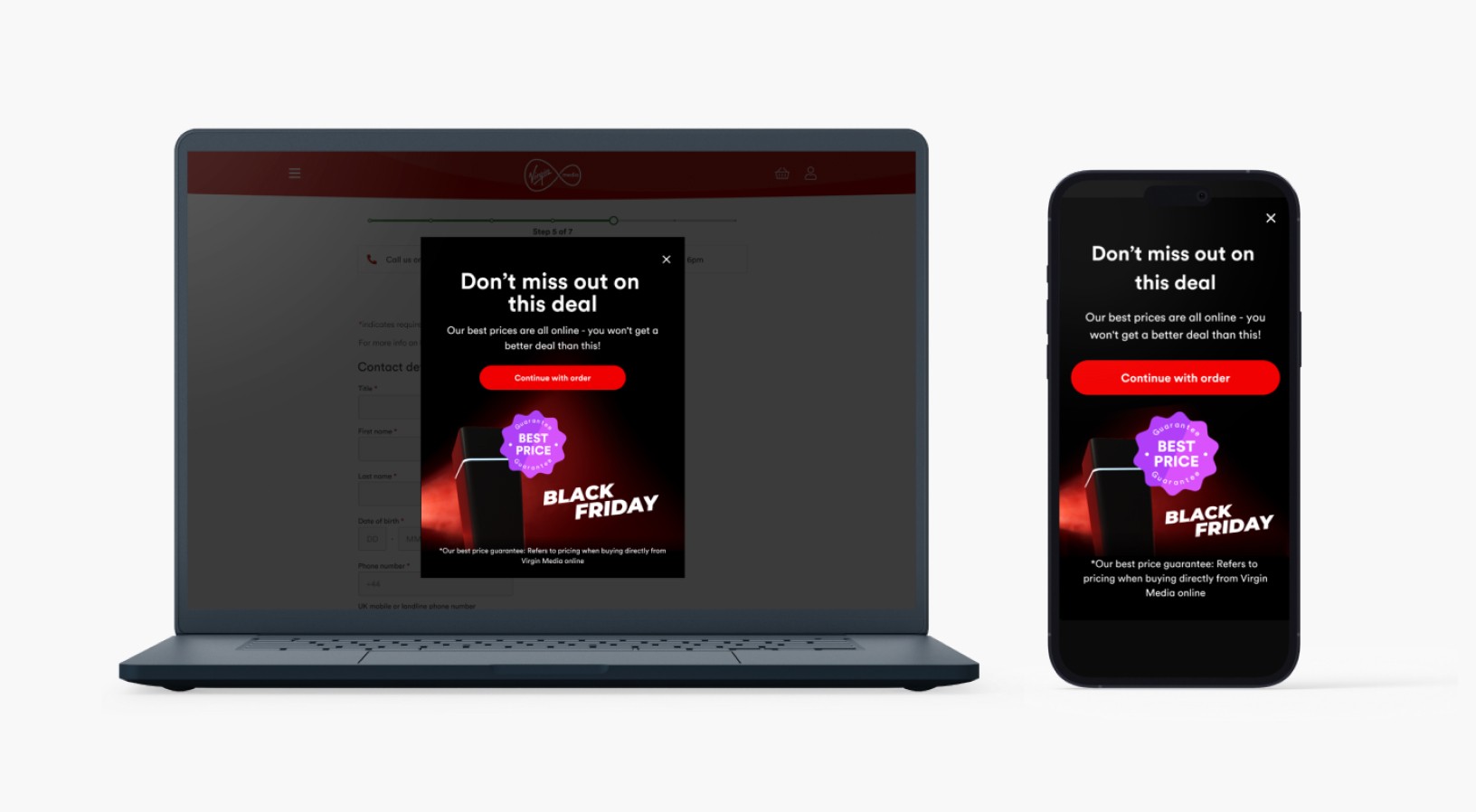
Design
With the designs, I created a pop-up banner which would trigger once a user is about to abandon the page. The visual is designed to communicate that these are the best deals you're going to get, and I've also tried to highlight there is a best price guarantee within the purple badge.
Result
The results were quite encouraging, it ran for two weeks, and we found 11% of users interacted with the order button which lead to a 53% conversion rate. But what we found was the performance dropped on the actual Black Friday weekend. So we decided to retest the solution during Winter Sale, as it provides a longer testing period, so this test will run for 3 weeks. And we want to see if the same issue happens again.