Challenge
User research revealed that customers found it difficult to differentiate between O2’s various tariff plans. On mobile, long product tiles required excessive scrolling and repeated information made comparisons harder. This created friction and reduced progression through the purchase journey.
Objective
Simplify the tariff tile design to make plan comparison faster and clearer, while supporting the new Limitless proposition.
The goal was to streamline the experience, reduce cognitive load, and ultimately improve conversion.
Research
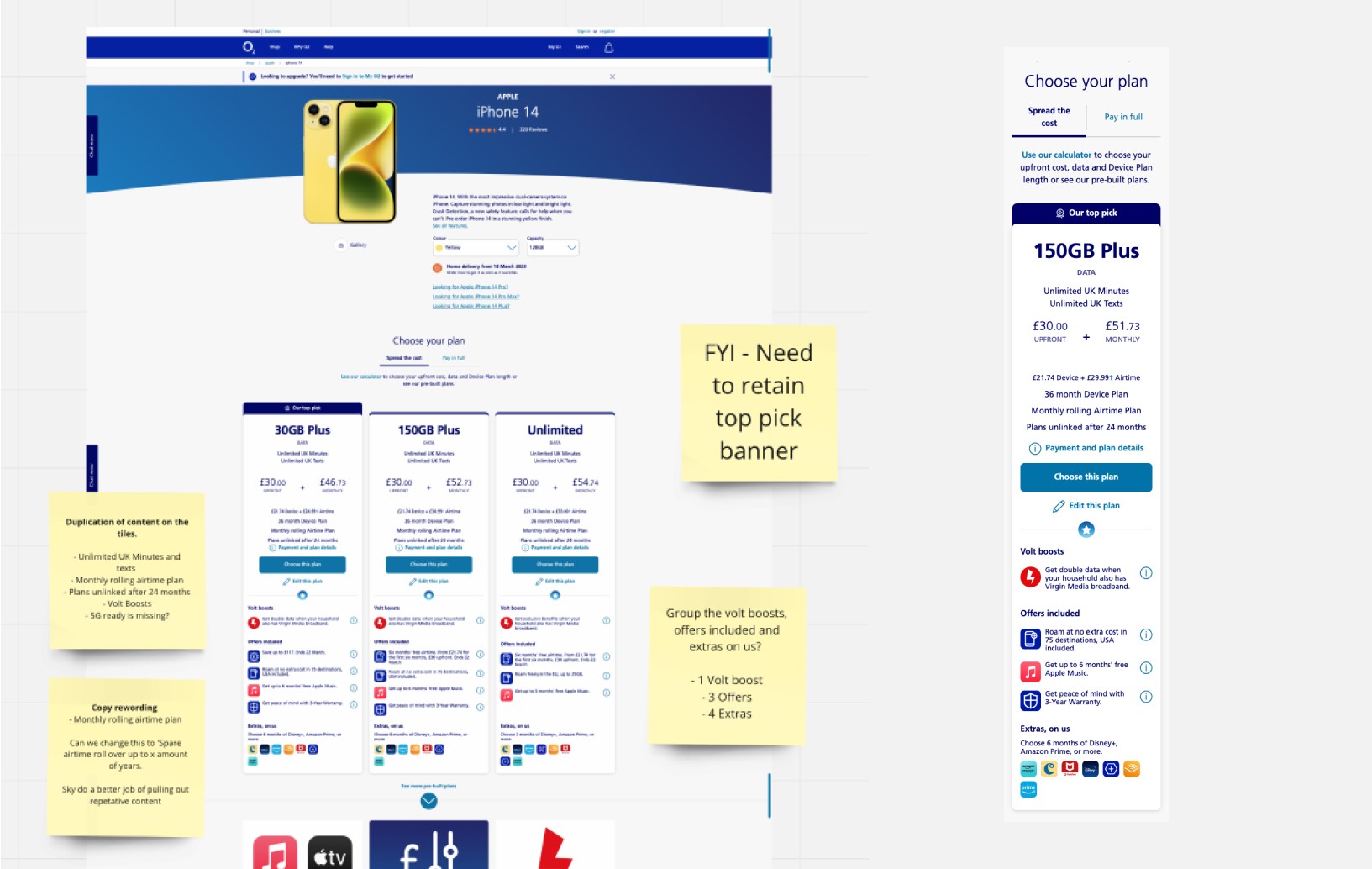
Current tariff cards
When examining the current tariff cards, it is concerning to see their excessive height, especially considering the browsing experience on mobile screens. To address this issue, I conducted competitor research to evaluate successful and unsuccessful approaches.
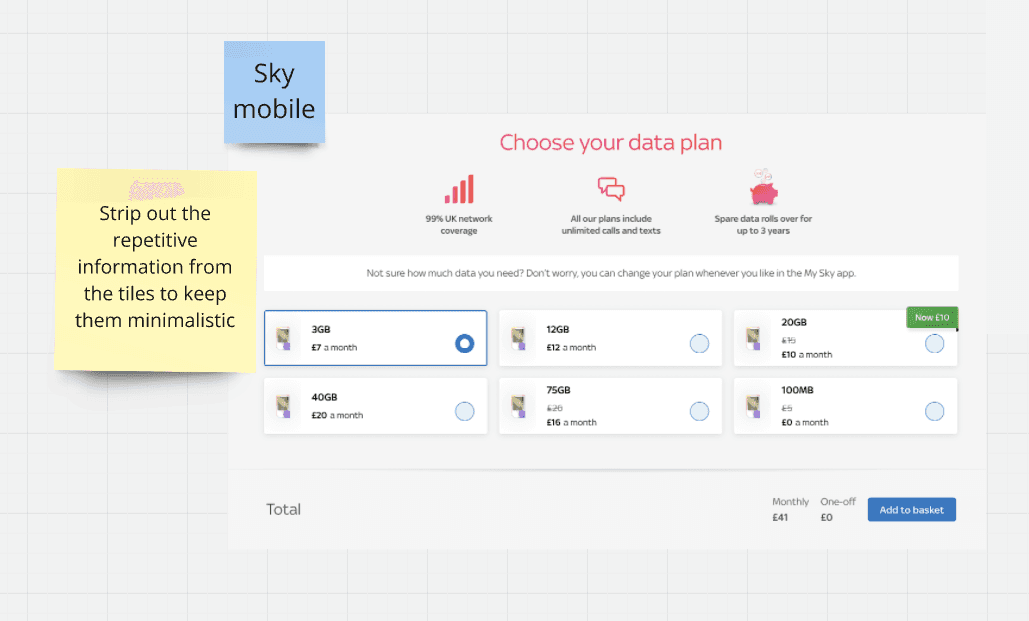
Competitor research
I found inspiration from Sky's strategy of grouping repetitive information. Upon analysing the existing pre-built tiles, it became evident that they contain a significant amount of redundant information.
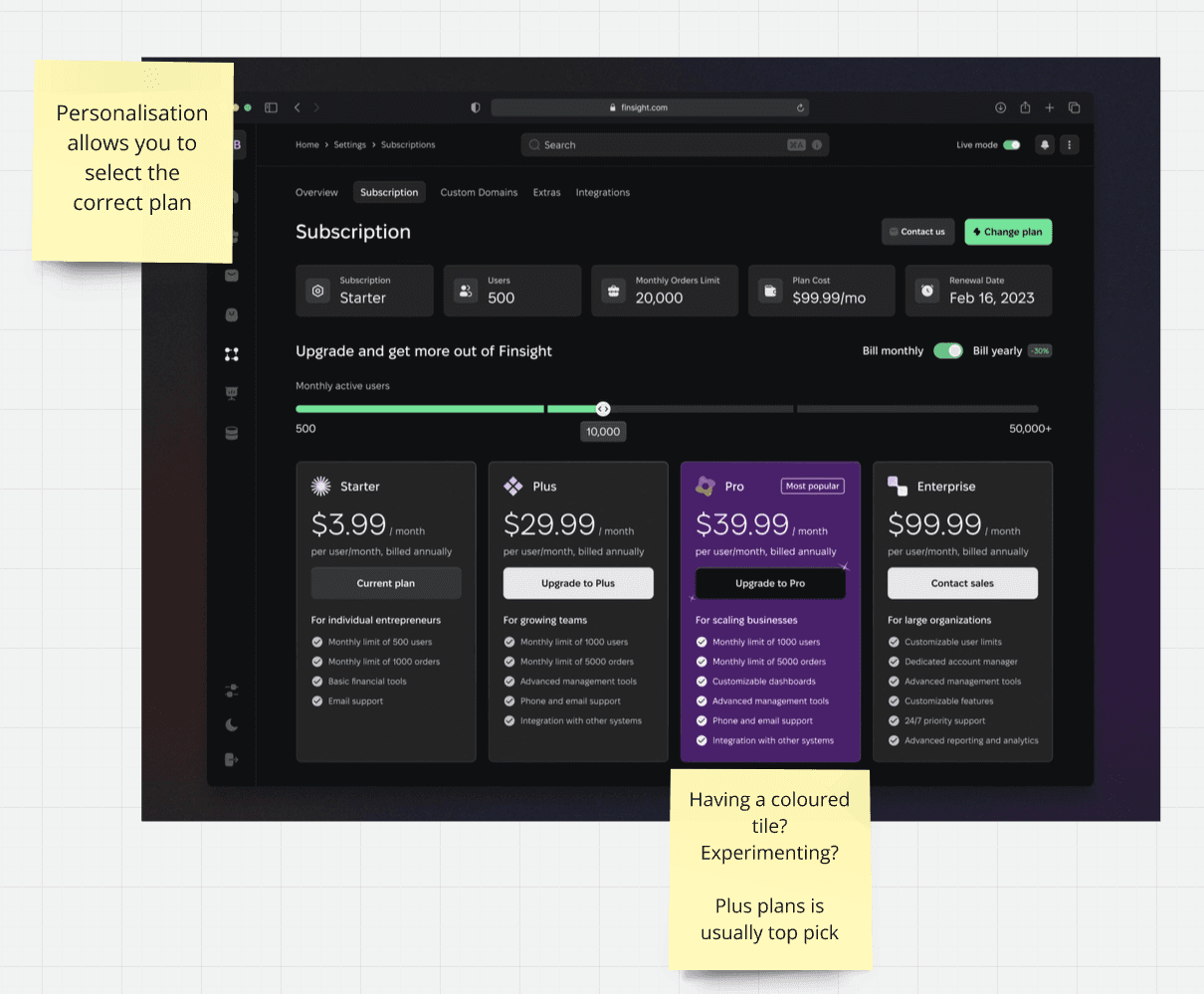
Design research
I drew inspiration from Sky’s approach of grouping repetitive information and from creative examples on Dribbble that visually differentiated plan tiers. This helped define a clearer information hierarchy and visual strategy for O2.
Ideation
I began sketching a range of ideas, narrowing them down to two key concepts which I developed into grayscale prototypes. After stakeholder feedback, I refined these into a final concept and moved into visual design.
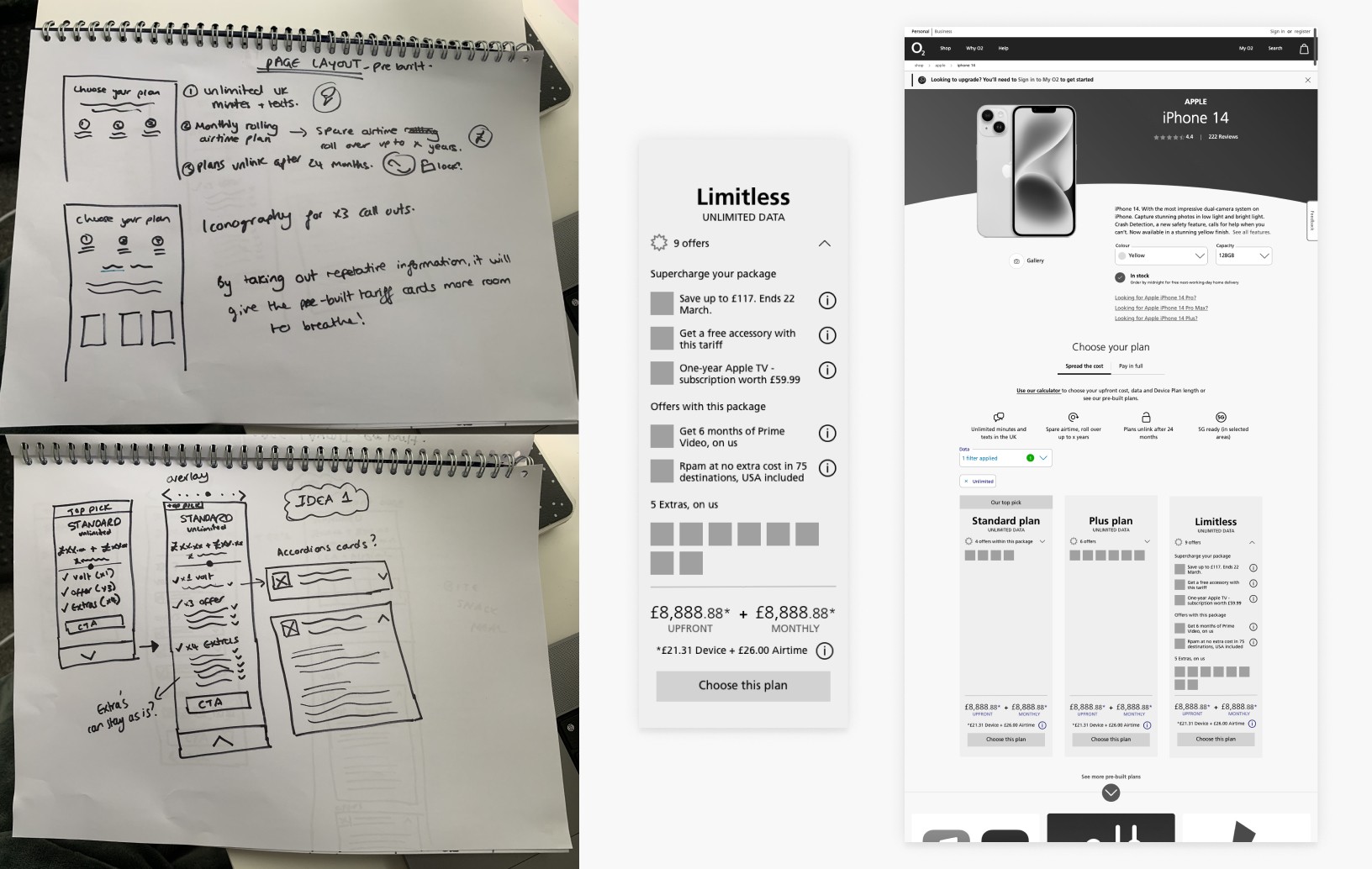
Design Approach
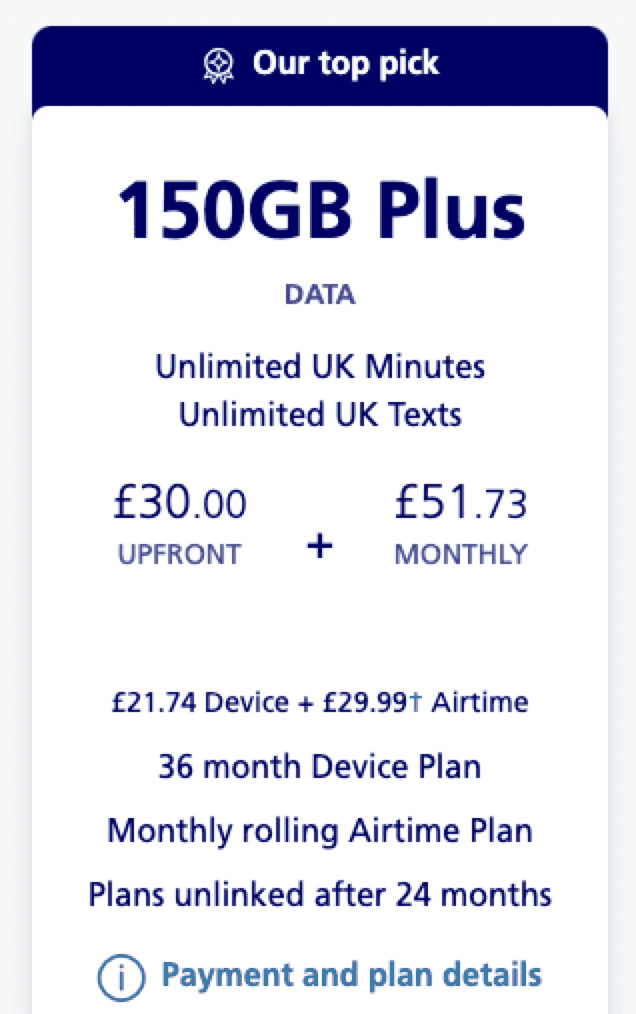
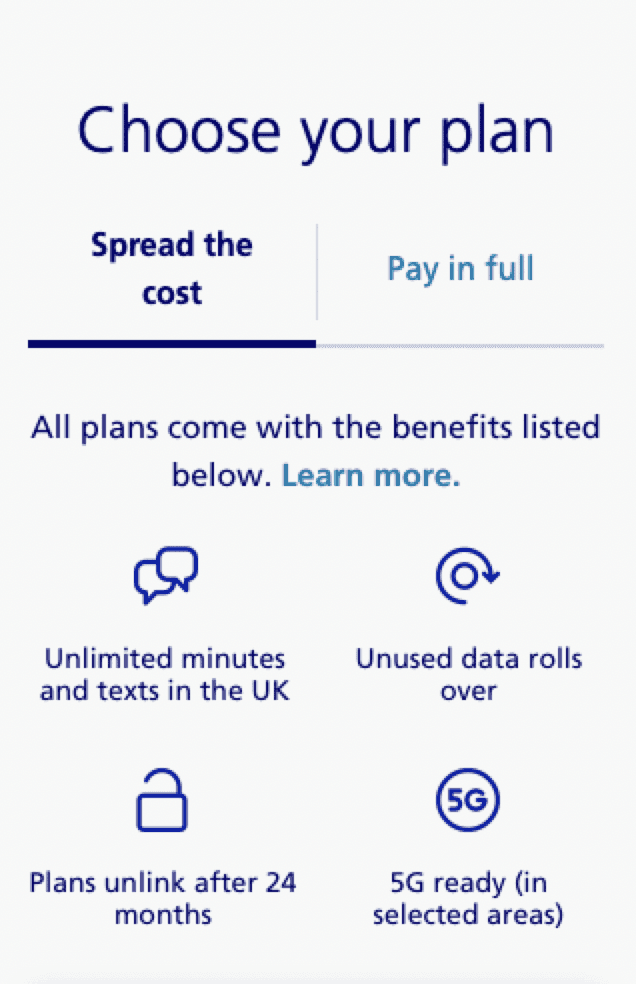
Global component
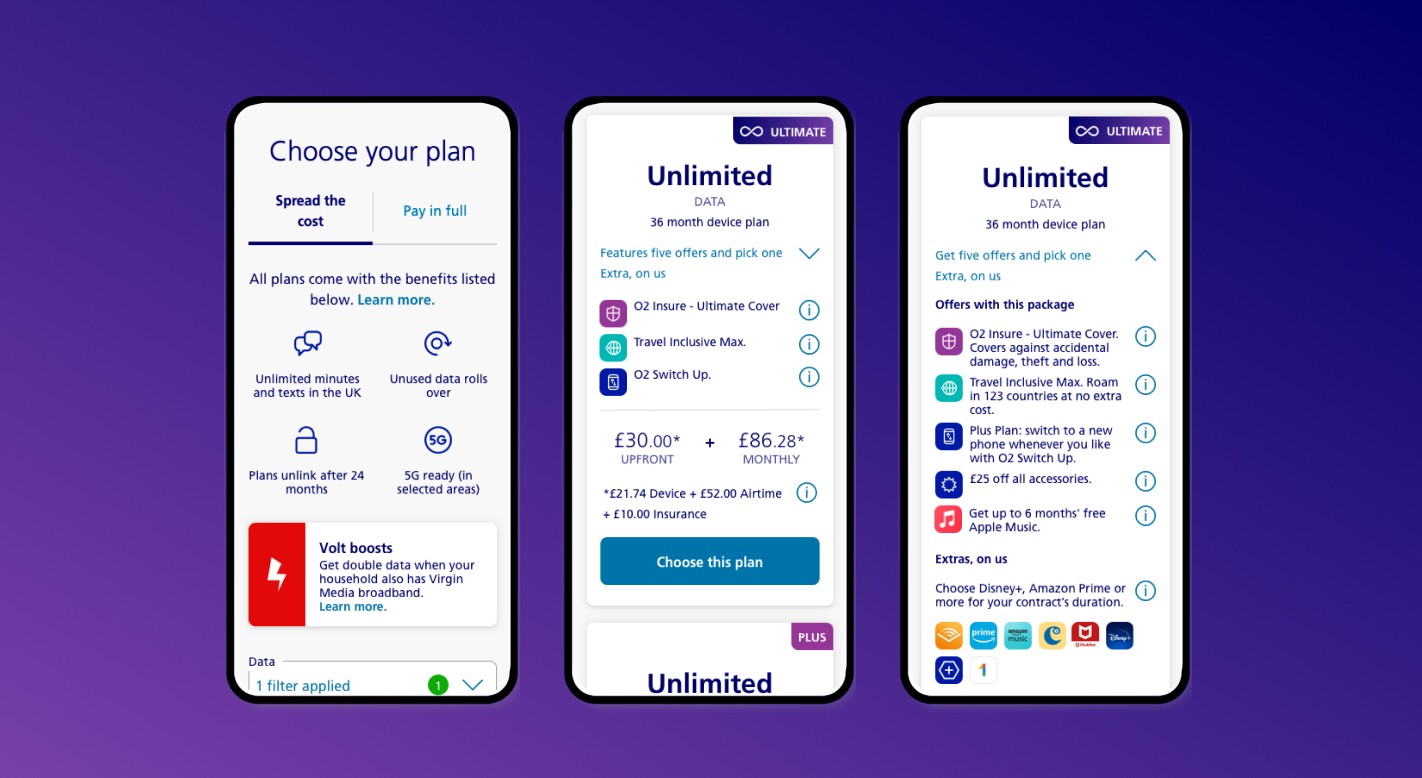
I removed repetitive information such as unlimited minutes and texts, unused data roll over, plans unlinking after 24 months, and 5G readiness, and moved this above the tariffs as a global component.
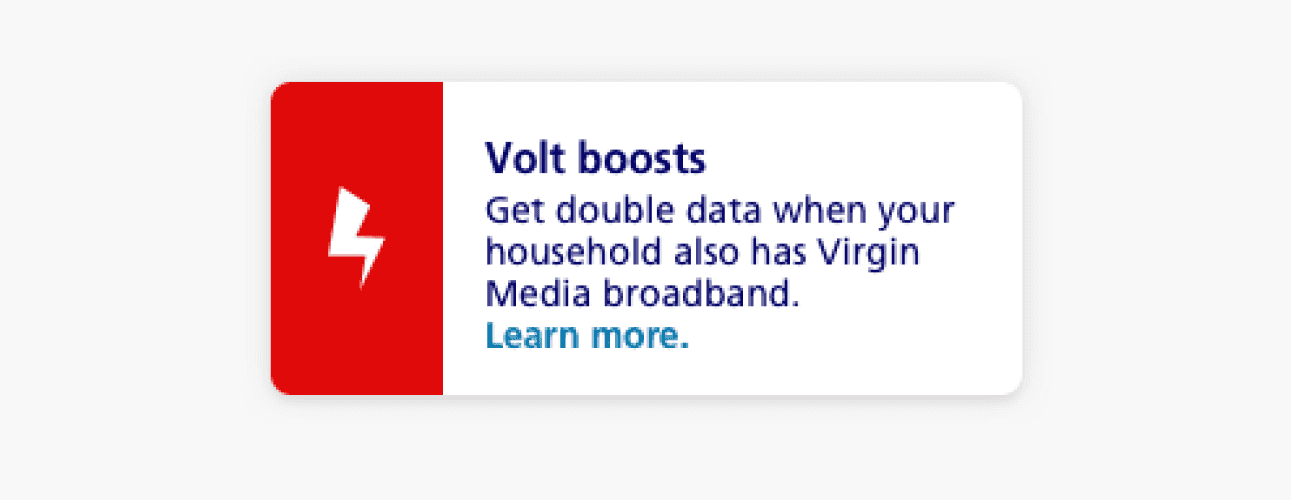
Volt boosts
Repeated Volt Boost content was removed from individual tariffs and incorporated into a new ‘Whisper’ module to support Virgin Media cross-sell messaging.
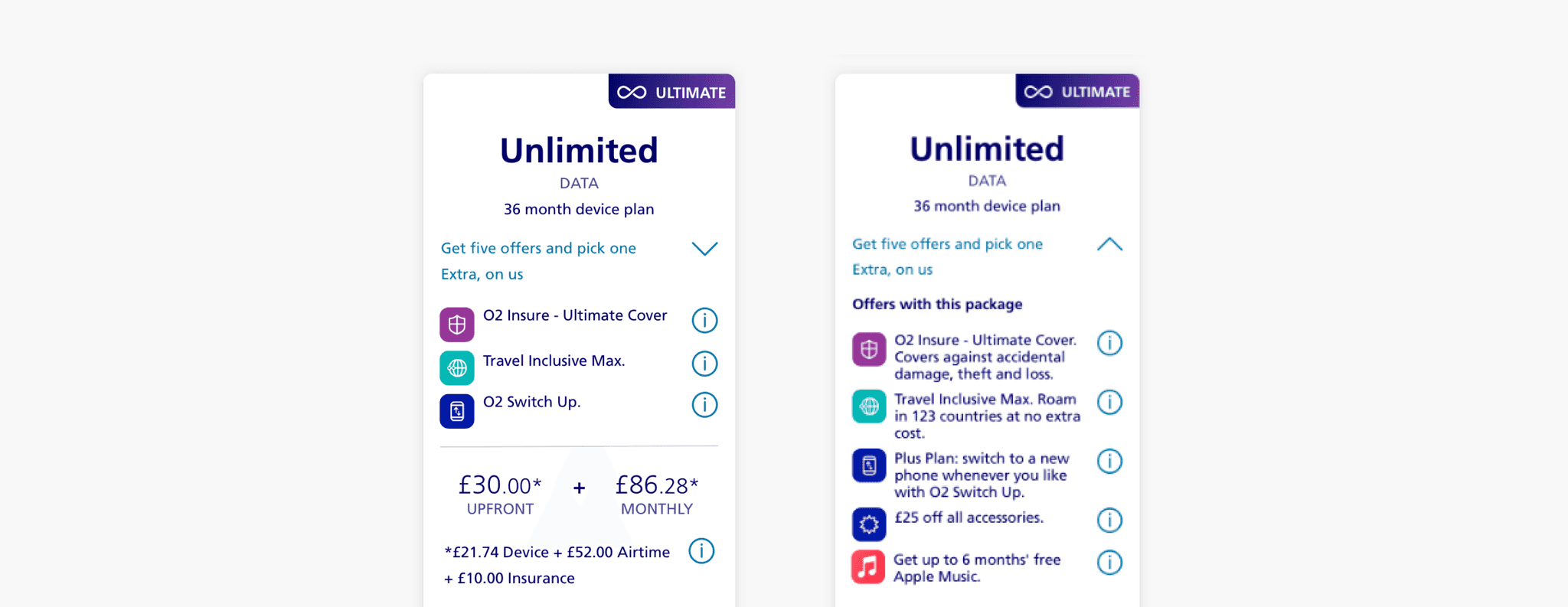
Drop down
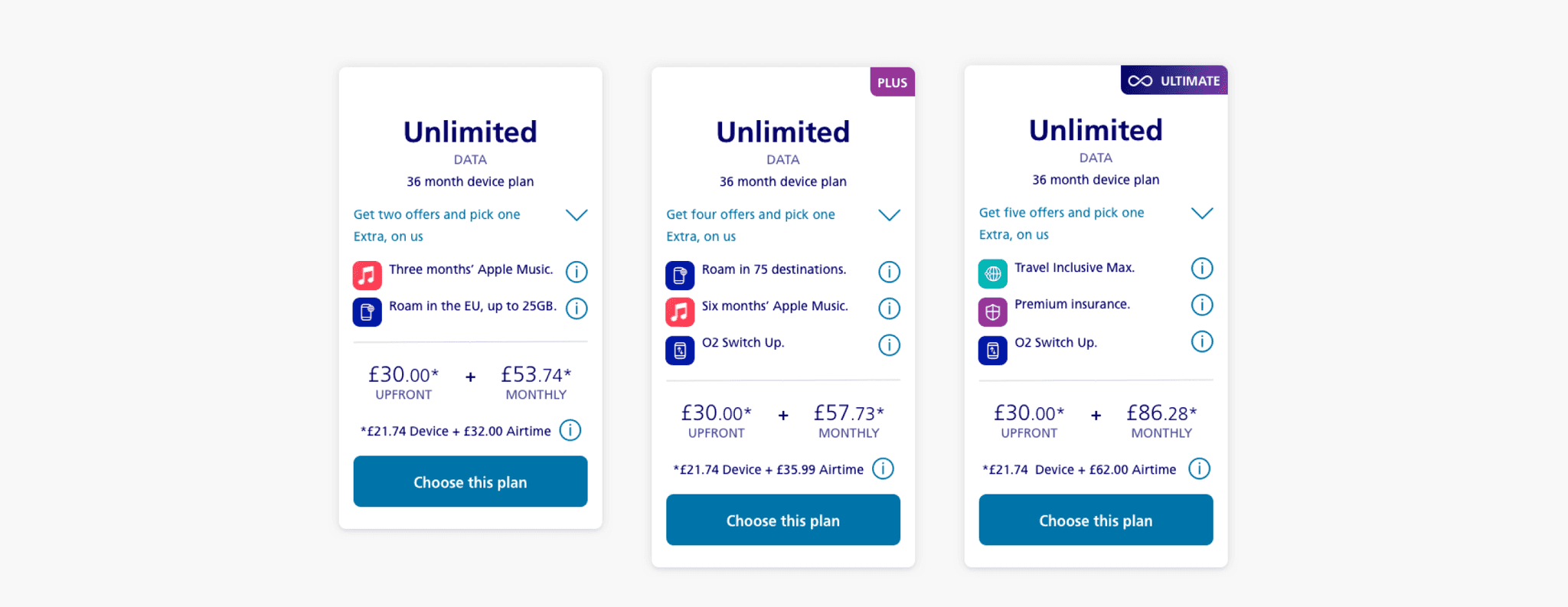
On the new tariff tiles, we showcased the top three offers with concise and catchy descriptions. However, if a customer wanted more detailed information regarding the amount of offers and extras included in a specific plan, they could click on the drop-down accordion link.
Badge
I added a badge onto the tariff tiles for plus plans and the new ultimate plan, creating a hierarchy of "good," "better," and "best."
Filter
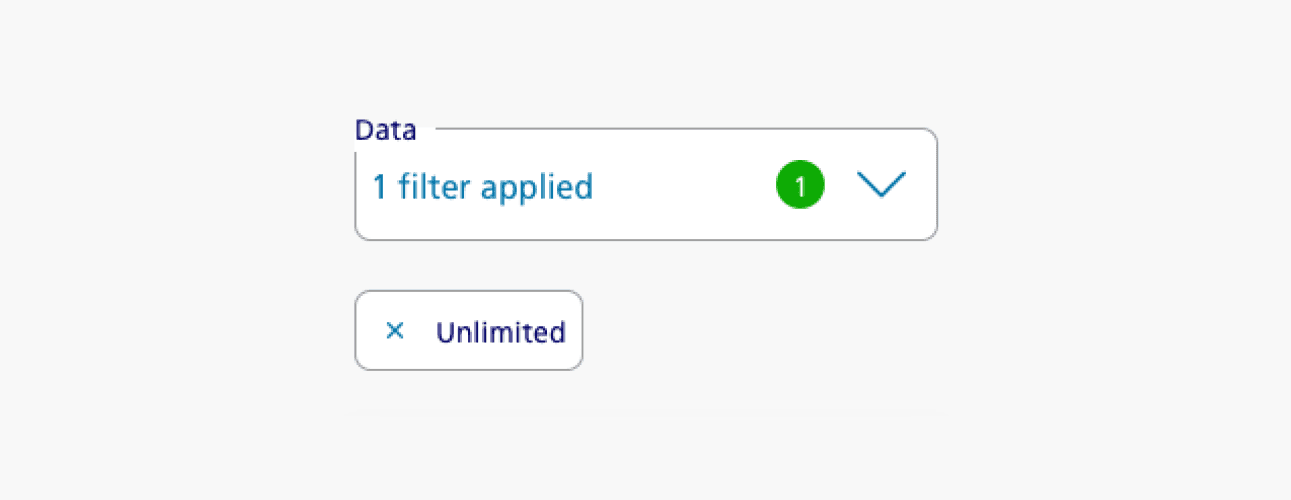
As Plus plans span multiple data options (e.g. 30GB or 150GB), I added a filter control to help users navigate choices more easily.

See more button
To improve scannability, I limited the number of visible tiles to three by default, with a “See more” button to reveal additional plans.
Userzoom testing
After positive feedback from stakeholders, I partnered with a UX researcher to define test questions and validate comprehension of the new hierarchy.
In a study with 10 participants, key results included:
7/10 users navigated correctly using the dropdown filter.
8/10 easily used the accordion to view plan details.
10/10 successfully identified the plan hierarchy.
Most users missed the global benefits section, leading to a recommendation to use SessionCam to assess engagement.

Results
Following launch, the redesign drove measurable improvements in both engagement and conversion:
+8% progression rate: More users moved confidently through the purchase journey.
+6% conversion rate: Simplified comparison improved understanding and purchase intent.
These results validated that simplifying choice architecture and presenting plans more intuitively enhances user understanding and business performance.
Final designs
Key learnings
Grouping global benefits reduces visual clutter and accelerates decision-making.
Users value clear visual hierarchy over excessive detail.
Small layout refinements can significantly improve task completion on mobile.
Reflection
This project reinforced the importance of evidence-based design. By grounding layout changes in user insight, we not only improved clarity and comprehension but also delivered measurable impact for both customers and the business.
Since launching, the design has continued to evolve through ongoing optimisation, reinforcing the value of continual testing and iteration in delivering exceptional customer experiences.
Collaboration & Mentorship
Alongside delivering the design work, I also mentored a junior designer eager to expand into product design. I guided her through my design thinking process, explaining the rationale behind layout decisions, interaction patterns, and testing methodology. This not only supported her growth but also strengthened collaboration and consistency across our wider design output.